Posts

Showing posts with the label Tropical_Asia

Gima-shak or Pot-biroot, Glinus oppositifolius

Image
Gima-shak or Pot-biroot ( Glinus oppositifolius , family: Molluginaceae) is an annual herb with diffiuse branches and taproot. Stems can be 3 to 40 cm long. Young shoots and branches are silky and sometimes reddish. It is found in waterside area, cropfield, fallow land and damp places in Bangladesh. It occasionally grows on old walls. It is found in the tropical Asia, Africa and in Australia too.  Leaves are 1-2.5 cm long, elliptic-oblanceolate, petioled, opposite. Flowers are tiny, white in color, showy, 0.4 cm long, petals 5, stamens 5-10. The flower buds are reddish. Fruits are ellipsoid, reddish or brownish, 4-5 mm, 3-valved; seeds numerous. The plant is propagated by sedds.  It can be planted as an ornamenal plant in tub or pot. It is eaten as vegetables in Bangladesh. It is used in constipation, indigestion, itching and various kinds of skin diseases. By the by, like many other herbs the color of the whole plant is occasionally reddish.
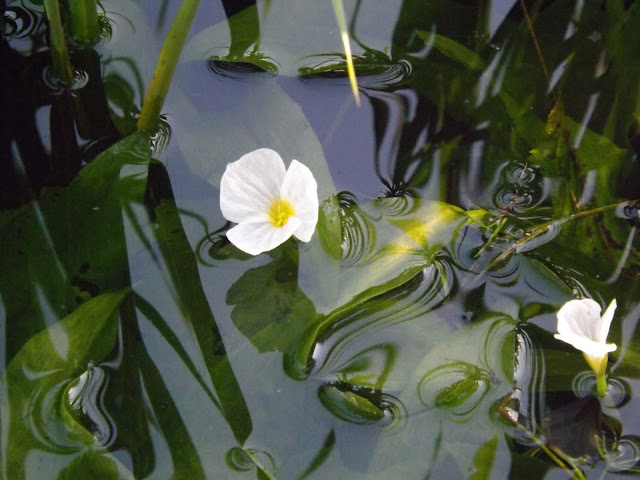
Panikola or Duck lettuce, Ottelia alismoides

Image
Panikola or Duck lettuce ( Ottelia alismoides, family: Hydrocharitaceae) is an annual submerged herb grows in the paddy fields and at the edge of water bodies. The short-stemmed aquatic plant prefers shallow water bodies and can survive in strong light. Its roots along with rhizome are ingrained in soil. It is found in the tropical and subtropical Asia, Africa and Australia. Other Bangla names              Ram korola, Kaobali, Torukola, Shyamkola, Kuchkolai, Jol-kolosh, Pani-kolosh, Jol-kola. Leaves grow up with the rise in water level. Size and shape of the leaves are different. They are usually oblong-cordate, slightly clear, fragile, edge undulate. The size of the petiole depends on the level of water too. It generally gets a length of 10-20 cm. Peduncle comes out from the rhizome.  The flower is covered with green spathes in early stage. Mature flower stands erectly on the water. Flower is white or light violet. S...

Kanchira or Bengal dayflower, commelina benghalensis

Image
Kanchira  or Bengal dayflower ( commelina benghalensis , family: commelinaceae) is an annual herb with swollen nodes. It is native to tropical Asia and Africa.  Common names: Kanchira, Bengal dayflower, Tropical spiderwort. Leaves are green, alternate, simple, 10-15 cm long, with prominent sheath. Inflorescence arises from the axil of a foliage leaf. Flower is blue, small, sepals 3, petals 3. It blooms in August-September.  Propagation of the plant is caused by seeds.  It grows as a weed on fallow land in Bangladesh. Its juice is applied as antiseptic on cut or burning injury. Root is used in headache, fever and leprosy. Knot of stem is used to prevent sterility.

Padma, Lotus, Nelumbo nucifera

Image
Padma or Poddo , ( Nelumbo nucifera , family: Nymphaeceae) is a large and erect aquatic perennial, found in the water bodies of rural area of Bangladesh. The plant is also native to Tropical Asia. Padma is the national flower of India and Vietnam. Common names: Padma, Poddo, Lotus, Indian lotus, Sacred lotus. Petiole comes out from rhizome. Petiole is 75-100 cm long. Leaves are big, round, 40-45 cm long, bluish green.  Flower is big, pink or white, scented. Fully bloomed flower is 15-20 cm across. Sepals 4-5, ovate-elliptical, persistent. Petals many, 4-15 cm long, elliptical. Numerous stamens surround pistil at the center of flower.  It blooms mainly in the rainy season.  Leaves and flowers are used in strangury, blood dysentery, bilious dysentery, vomiting and worm.  Leaves and flowers float on water.  A kind of alkaloid is collected from petiole and it is used in fever, liver and heart diseases. Young leaves, p...