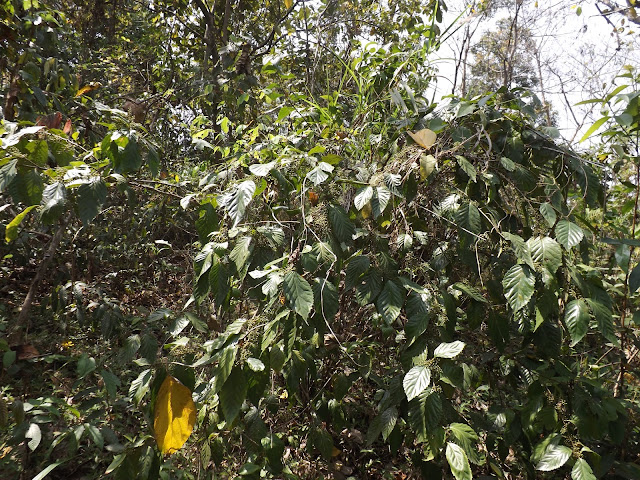
Bon nil or Wild indigo, Tephrosia purpurea

Bon nil or Wild indigo ( Tephrosia purpurea , Family: Fabaceae) is an annual or biennial leafy and bushy herb or undershrub with spreading branches, attaining a height of .75-1 m. Branches are glabrous or slightly hairy. It is found in thickets and forests all over the country. It is also found in tropical Africa, Indian subcontinent, some countries of Southeast Asia and some parts of Australia. Other names: Lohamari, Jongli nil, Buno nil (Bang); Purple tephrosia, Fish poison (Eng). Leaves are light green, pinnately compound, 6-10 cm long, leaflets 15-21, paripinnate or imparipinnate, opposite, ovate-oblanceolate, glabrous above, silky hairs bebeath. Flowers are Pea-like, 2-lipped, purple, 8-10 mm long, The corolla is two times longer than the calyx. 2-4 flowers in axillary inflorescence (6-18 cm long). It flowers in autumn (Sep-Nov). Fruit is legume, 4-6 cm long, linear, slightly curved at the top, dark brown when dry, dehiscent. Seeds are inedible, 5-9. Flowers a...