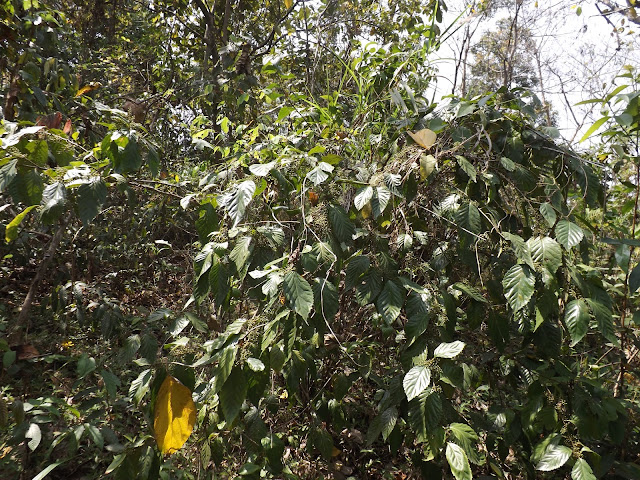
Modhunasini or Gurmar, Gymnema sylvestre

Modhunasini or Gurmar ( Gymnema sylvestre , family: Apocynaceae) is a woody and twining climber, covering with dense and yellow-colored hairs in young shoots and branches. The extensive plant is usually found covring the bushes or climbing a large tree in the forest, specially in the monsoon forests. Other names: Ajaballi, Ajaghandini, karnika, Mesh-shringi. It is originated in India. It is also found in Sri Lanka and South Africa too. In Bangladesh it can be seen in medicinal gardens and botanical gardens. Tomentose leaves are ovate-elliptic, opposite, cordate at base, tip pointed, 3-6 cm long and 1.5-2 cm wide, petioled. Flowers are axillary, yellowish, tiny, campanulate, fleshy, 4 mm in diameter, peduncled. Flowering occurs in the rainy season. Fruits are slender, knife-shaped, dehiscent, 3-9 cm long. The plant is propagated by seeds, air layering and cuttings The whole plant is full of medicinal properties. It is used in jaundice, piles,...